
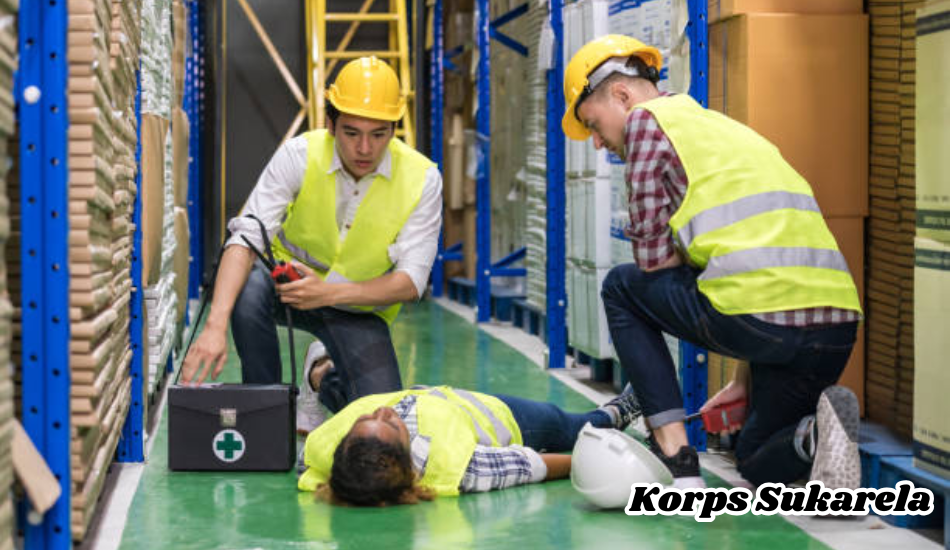
When I first learnt about Korps Sukarela (KSR), also known as the Volunteer Corps, I was inspired by how the Indonesian Red Cross (Palang Merah Indonesia PMI) manages this structured network of volunteers. With a defined aim to mobilize residents for community service, disaster response, health outreach, and social welfare, KSR members students, professionals, and parents work tirelessly to assist others when tragedy strikes. Their coordinated humanitarian efforts enhance local communities and propel public health programs. This crucial corps demonstrates that anyone with a desire to serve can make a lasting difference and deliver hope when people need it the most.
What is Korps Sukarela (KSR)?
When I first joined Korps Sukarela (KSR), I felt like I was a part of something very powerful a volunteer corps at the center of Indonesia’s organized humanitarian effort. As the volunteer branch of the Indonesian Red Cross (PMI), also known as Palang Merah Indonesia, its role extends beyond simply showing up during difficult times. It aims to mobilize regular folks to participate in community service, disaster relief, health outreach, and social welfare programs. This organized volunteer network is critical to assisting local communities throughout Indonesia in preparing for and recovering from emergencies.
I recall the first time our Volunteer Corps was summoned to assist when floods struck a nearby village. The members had already been train to respond promptly with first aid, health programs, and direct assistance to anyone who needed to feel safe and supported. Whether it’s an earthquake, a volcano eruption, or a minor crisis, the team always arrives quickly and never leaves anyone behind. What distinguishes KSR is its ability to link individuals not only during disasters but also in everyday life, resulting in a united community that actually cares.
The Inspirational History of Korps Sukarela
KSR’s origins began in post independence Indonesia, when unification and humanitarian aid were viewed as critical to the country’s reconstruction. The concept of volunteer work in Indonesia has its roots in the traditional ideal of gotong royong (community cooperation), which urged people to help one another without expecting anything in return. This timeless attitude served as the foundation for Korps Sukarela (KSR), a formalized volunteer organization under PMI (the Indonesian Red Cross). I recall visiting a local branch during my college years and being very amazed by how these volunteers collaborated with institutional support, demonstrating how compassion could actually connect a community.
Over the decades, KSR has grown from tiny units in colleges, high schools, and local communities to a nationally known network with regional chapters. Its evolution allowed volunteers to move from ad hoc efforts to continual training and organized responses, establishing them as a reliable backbone in disaster relief, public health, and community outreach. This organized team within PMI currently represents the finest form of service and cooperation, preserving the essence of gotong royong, which defines the Indonesian way of life.
Read More: Phelicznik: Unlock the Curious Power of Creativity Today.
Korps Sukarela: Structure and Operations
My experience working with Korps Sukarela (KSR) members has shown me how well this group is organized through PMI chapters at the province, municipal, and district levels. Each branch plays an important role in bringing together youth and community people who are passionate about helping others. Many university units and youth wings of the Red Cross also work with KSR, resulting in a broad volunteer network throughout Indonesia.
Those who join KSR must be at least 18 years old, physically and psychologically healthy, and have a minimal level of education. Members commit to training and service, completing basic, advanced, and specialized programs to prepare for various roles. These could include disaster squads, health outreach teams, and other types of emergency response. Every participant, whether young or experienced, contributes to the KSR attitude of readiness, compassion, and teamwork.
Key Roles and Responsibilities for KSR Volunteers
Growing up in Indonesia, I saw firsthand how our country’s geography influenced daily life how earthquakes, floods, tsunamis, volcanic eruptions, and landslides might strike unexpectedly. During such circumstances, the Korps Sukarela (KSR) emerged as the frontline volunteer force on whom communities could rely. This established link with PMI guarantees that volunteers are quickly mobilize to deploy locally, and they are frequently among the first to join relief activities. They become major contributors to disaster mitigation by receiving continual training in crowd control, first aid, logistics, and shelter management. Their passion exemplifies both courage and coordination, as formed by real-world circumstances.
Working with KSR volunteers has allowed me to watch how they turn compassion into action. These volunteers do more than just respond to disasters; they also build the community by providing disaster response, evacuation assistance, and temporary shelters. They provide emergency medical care, handle aid delivery, and arrange blood drives, which include donor recruitment, event management, and community education on regular donations. Aside from crisis work, they promote community health through free health screenings, immunization campaigns, COVID-19 prevention, cleanliness, and sanitation programs. Their role includes mental health workshops, youth education in schools, HIV/AIDS awareness, drug addiction prevention, conflict mediation, and environmental care, demonstrating that KSR’s aim goes beyond immediate help to create resilience for the future.
Training, Skills, and Personal Growth at Korps Sukarela
Joining Korps Sukarela (KSR) is more than just helping others; it’s also about developing yourself. Every recruit starts with a basic training program (diklat), which transforms them into self-assured volunteers ready for real world operations. This training includes first aid, basic life support, and catastrophe risk reduction, ensuring that members are always prepare for a variety of circumstances. The training program also covers logistics, communication, and organizational ethics, transforming each member into a well-rounded humanitarian. Later, advanced and specialist training introduces units such as Satgana (disaster readiness squads), where they study mass casualty management, psychosocial support, and water and sanitation skills, putting their resilience and teamwork to the test.
As someone who has seen the KSR in action, it is evident that their operations go far beyond disaster relief. In a disaster, they organize shelters, distribute relief supplies, and plan evacuations. During less stressful times, they arrange blood drives, health campaigns, and youth education on HIV/AIDS, drug prevention, and life skills. Universities’ KSR teams frequently lead social service projects in nearby neighborhoods, demonstrating how community cleanups and Restoring Family Links bring people together. This sense of solidarity, which originated in post-independence Indonesia, exemplifies PMI’s vision of an organized team of trained volunteers. Over the years, it has expanded from tiny local units to a national network, serving as a reliable backbone for disaster assistance, public health, and community outreach.
The Effects of Korps Sukarela on Communities and Public Health
In Indonesia, the Korps Sukarela (KSR) plays an important role in improving public health and welfare. In addition to their swift crisis response, these volunteers donate countless hours to health education, blood donation campaigns, and outreach to marginalized populations. Many young people participate in peer counseling and remaja sebaya programs that encourage substance addiction prevention, sexual health knowledge, and increased health literacy. Based on my observations of KSR activities, their initiatives have significantly reduced disease incidence and increased community resilience, making neighborhoods stronger, more knowledgeable, and deeply compassionate toward one another.
KSR’s work also includes community development and environmental sustainability, with volunteers leading tree-planting, garbage management, and clean water projects. They construct community centers to boost education and conduct vocational training and life-skills programs to help people participate meaningfully to society. For example, university KSR units, such as those at Soegijapranata Catholic University, organize blood drives, disaster awareness activities, and diklat sessions to train new members. Local PMI offices, such as PMI Depok City, recruit volunteers through structured programs that include 76 hours of basic training. With tens of thousands of active volunteers, hundreds of missions, and millions of people affected, KSR is helping to develop a healthier, stronger Indonesia.
University and Youth Participation in Korps Sukarela (KSR)
When I initially joined KSR at my university, I realized how effective student involvement can be in creating caring communities. Each branch of the PMI (Indonesian Red Cross) has units that routinely recruit young volunteers. Your local PMI office’s website usually includes information about the schedule, requirements, and future training events. Once you commit to the path, you will see yourself progressing through structured learning and relevant field experiences. From first-aid training to disaster response courses, the process teaches you teamwork and discipline, preparing you to boldly assist others.
The true strength of this journey is how it integrates academic life with real-world influence. Being a member of KSR is more than just volunteering; it entails accepting social responsibility and applying knowledge to community well-being. Joining your local unit allows you to turn your passion into purpose and become part of a nationwide network of young people who lead with empathy and courage.
Major Challenges for Korps Sukarela Volunteers
Being a member of Korps Sukarela (KSR) is a proud yet challenging experience. Many volunteers join with enthusiasm, but real-world obstacles frequently strain their limits. I’ve seen people struggle to juggle work, studies, and family commitments, making time management a constant battle. Even small operations in rural or impoverish places are hampered by resource constraints such as a lack of financing, equipment, and logistical assistance. During large-scale disasters, a lack of training or insufficient coordination weakens the ability to respond swiftly. Without adequate external assistance, many volunteers feel overwhelmed when attempting to assist those in need.
According to my own experience, KSR members confront not only physical risks in dangerous situations, but also emotional stress due to continual exposure to human misery. Working with minimal resources on missions can cause them to question their effectiveness, particularly when acknowledgment is lacking. Balancing education, job, and service may be exhausting. Despite these demands, their dedication remains strong, motivated by the notion that every act of kindness, no matter how tiny, counts.
How to join and support Korps Sukarela
Joining Korps Sukarela (KSR) in Indonesia is an important step for anyone who is passionate about assisting people during disasters or through social initiatives. To join, you must meet a few fundamental prerequisites. You should be at least 18 years old, have completed junior high school, and be in good physical and mental health. Before being formally accepted, volunteers must complete at least 76 hours of basic training, which includes first aid, evacuation protocols, logistics, relief distribution, and psychological first aid. Many university KSR units and local PMI chapters undertake open recruitment drives, allowing new members the opportunity to serve their communities and contribute to disaster mitigation efforts through specialized courses and continuous service.
Not everyone can commit to being on the ground, but you may still contribute and cooperate in other ways. You can contribute to the PMI disaster fund, help with transportation and logistics during disasters, or collaborate with KSR on CSR programs, community engagement, or collaborative projects with businesses and non-governmental organizations (NGOs). Sharing campaigns on social media or delivering professional training and experience are effective methods to provide continuing support. Personally, I’ve witnessed how even tiny efforts, such as raising awareness or contributing to a relief drive, can make a significant difference in maintaining the communal spirit that distinguishes KSR.
Read More: Pyjamaspapper: The Cozy Fashion Trend Everyone’s Talking About.
Why Korps Sukarela is Important in Today’s World
In Indonesia, the Korps Sukarela signifies more than just volunteer work it embodies a strong cultural value founded in gotong royong, or community cooperation. I’ve seen directly how this mentality binds people together, transforming modest acts of compassion into lifelong service. What began as ad hoc initiatives of caring citizens was subsequently formalized by PMI (the Indonesian Red Cross), providing institutional support and guidance. This transition did more than just provide organization; it also strengthened a shared purpose that has inspired countless people to give back.
Korps Sukarela has grown into a nationally recognized organization, with local branches linked to city and district Red Cross offices, as well as units in colleges and high schools. This careful evolution has allowed volunteers to go from one-time projects to ongoing training and coordinated emergency responses. Through this framework, I’ve seen volunteers improve not only in skill but also in compassion, demonstrating that the Korps Sukarela is more than just a system; it’s a live embodiment of Indonesia’s enduring unity and humanity.
FAQs
1. What is the Korps Sukarela (KSR)?
Korps Sukarela (KSR) is an Indonesian Red Cross volunteer corps that focuses on humanitarian work.
2. What is the primary mission of Korps Sukarela?
Its purpose is to engage residents for community service, disaster relief, health outreach, and social welfare programs.
3. Who can join Korps Sukarela?
Anyone, including students, professionals, and parents, can join KSR. The corps welcomes anyone who wants to help others and serve their community.
4. How does KSR assist during disasters?
KSR volunteers are trained to provide coordinated humanitarian assistance, such as rescue operations, first aid, and relief distribution.
5. Why is Korps Sukarela so important in Indonesia?
KSR plays an important role in connecting individuals to act generously during emergencies, thereby fostering the spirit of community and compassion throughout Indonesia.
Final Thoughts
Korps Sukarela (KSR) is the beating heart of Indonesia’s humanitarian efforts, with members who selflessly assist in rain or sun, crisis or calm. This well organized, powerful model of volunteers is founded on ideals, discipline, and community service. Their varied work includes disaster response, health outreach, and environmental projects that have a significant impact on many people’s lives.
KSR responds to modern difficulties by providing constant training, coordination, and innovation, making community service more interesting and impactful. Many volunteers see it as a road to finding purpose, belonging, and building a stronger, more resilient nation via communal knowledge and support.

