
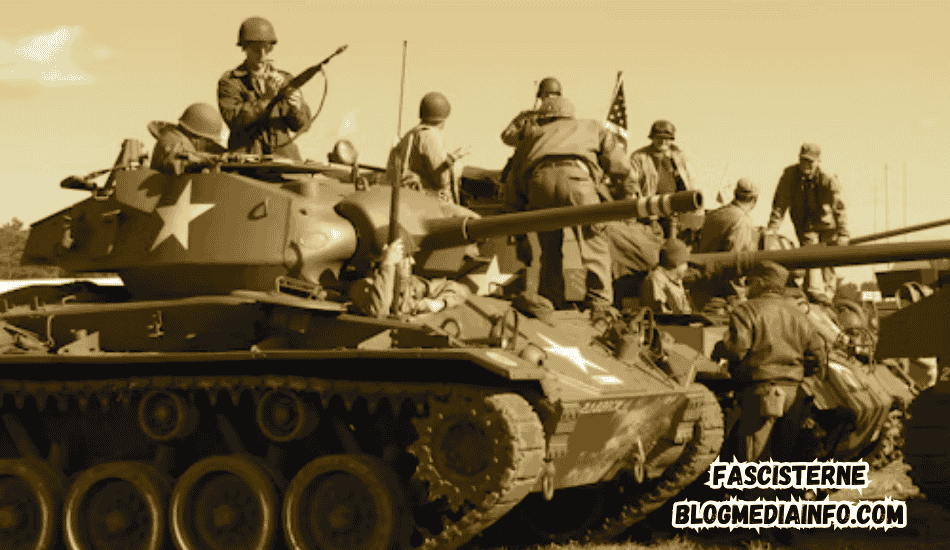
When analyzing the origins and beliefs of Fascisterne, it is clear that Fascisterne had a significant impact on both political and social history in the twentieth century. Rising in Italy and Germany throughout the early twentieth century, these parties and individuals adopted an authoritarian, ultra-nationalist, and anti-democratic worldview, fueled by turbulence and resentment following post-World War I instability. Their fundamental characteristics—extreme nationalism, militarism, and dissent suppression—forged a strong bond between power, identity, and society. This philosophy swept throughout Europe, influencing political landscapes, motivating prominent figures, and leaving a legacy that continues to elicit intense reactions. Understanding its origins, evolution, and contemporary interpretations teaches important insights about authoritarianism, nationalism, and the persistent relevance of such beliefs today.
Historical Context: Fascism’s Rise in Europe
After World War I, several European countries experienced severe economic hardship, political instability, and significant civil unrest. Massive debts and mounting unemployment created discontent and dread. As citizens sought solutions to the instability, radical ideas grew in popularity. In Italy, unhappiness with the postwar settlement aided Mussolini’s rise, as he promised strong leadership while appealing to nationalistic impulses. By the 1920s, authoritarian and dictatorial regimes began to emerge, providing order and hope to desperate masses.
Meanwhile, Germany faced hefty fines under the Treaty of Versailles, continued economic woes, and communism fears. This turbulence enabled Hitler to capitalize on public outrage, emphasize the supremacy of the Aryan race, blame minorities, and redraw borders. By the 1930s, fascism had acquired traction, demonstrating how desperate citizens frequently accepted authoritarian leadership and dictatorial regimes as a means of surviving postwar Europe’s disarray.
Read More: Icostamp: Transform Your Stamping Needs with Digital Ease.
Fascists Across Europe
When researching fascism in Europe, it is fascinating to see how Fascisterne moved beyond Italy and Germany to countries such as Spain and Hungary. In my own research and reading, I discovered that these movements frequently capitalized on the public’s worries of communism and unemployment, promising stability and a restoration to national pride. In Spain, leaders such as Francisco Franco merged fascist ideology with local conservatism, resulting in a unique political mix that appealed to a large number of residents. Across Europe, propaganda and huge rallies became crucial methods for gaining support, emphasizing state allegiance and a strong national identity.
Observing historical patterns reveals that fascism thrived where people felt insecure and estranged from their governments. In Italy, Germany, and elsewhere, the capacity to harness anxieties and turn them into communal solidarity was critical. The groups frequently portrayed themselves as defenders of national identity, utilizing enormous demonstrations and persuasive propaganda to unite citizens behind a common goal. Even today, analyzing these techniques provides insights into how political movements in Europe might capitalize on public worries to gain power and influence.
Understanding the core ideology of fascism
Authoritarian leadership and national identity
According to my observations of historical movements such as Italian fascism and Nazi Germany, the fascisterne based their authority on authoritarian leadership, rejecting democracy and promoting centralized leadership under a single ruler. They thought that the nation and collective identity were more important than individual rights, and they frequently used extreme nationalism, ultra-nationalism, and ideas of cultural superiority or identity dominance to unify insiders while vilifying outsiders. This framework fostered a society in which loyal citizens were praised, while traitors or detractors were persecuted, threatened, or imprisoned.
Militarization, Discipline, and State Control
The fascists also supported militarism, seeing war and bloodshed as weapons for achieving national objectives and enforcing the cult of violence. Uniforms, parades, flags, and rallies served to promote discipline, submission, and psychological control, developing emotional attachment to the state. Standard procedures included propaganda and press control, which eliminated free expression, suppressed independent media, and silenced any opposition. Corporatism and state control coexisted with aspects of capitalism and socialism in the economy, resulting in a third option meant to align industries, labor, and the government with national objectives.
Racism, Purity and Absolute Authority
Racism, eugenics, and the ideals of racial, ethnic, and cultural purity were important to the fascist ideology, which was frequently justified through myth, symbolism, and ritual to foster national regeneration and a feeling of destiny. Exclusion, isolation, and even elimination were used to maintain racial or ethnic purity, reinforcing the idea of a single, greater collective welfare. The movement continually stressed the party and its leader over pluralism, multiparty democracy, and checks and balances, establishing centralized authoritarian power as absolute and unchallengeable.
Racism, nationalism, and totalitarianism play important roles in fascism.
In my experience researching fascism, I cannot ignore how racism became a tactic for imposing full power. Fascist governments meticulously created conceptions of ethnic superiority and used them to justify harsh measures against marginalized minorities. This resulted in a us versus them mindset, in which the public was taught to regard foreigners as adversaries and devotion to the state as admirable. Such a regime depended largely on propaganda and brutality to organize the populace, guaranteeing that conformity was not only expected but also commanded in both public and private life.
At the same time, nationalism served as the foundation of fascism, instilling pride and a sense of solidarity while suppressing diversity and free thought. State power penetrated every part of society, suffocating individual liberties inside a tight framework of authoritarianism. Any dissent was repressed, and unrestrained ideas took hold, defining national identity while controlling residents’ beliefs, actions, and loyalties. Experiencing this framework directly reveals how fascist regimes use both fear and pride to retain power, creating a terrifying climate in which both public and private life are completely governed by the government.
Comparing fascism with other authoritarian ideologies
When we compare fascism to other authoritarian ideologies, Fascisterne is evident that its emphasis on national unity and identity distinguishes it from communism, which promotes classless society through state control of resources. While both totalitarian regimes require strict loyalty to the state, fascism glorifies militarism and warfare as tools for national greatness, as opposed to Stalinist communism’s more bureaucratic forms, which prioritize industrialization and centralized economic planning. Fascism also emphasizes radical nationalism, frequently opposing economic equality while promoting communal harmony and social cohesion within the nation-state.
Interestingly, fascism shares characteristics with religious authoritarian movements that seek spiritual government based on divine principles or ancient religion, but Fascisterne is typically secular in nature. Both systems require ideological dedication, but fascism focuses this on national identity rather than spiritual ideas. This ideology capitalizes on anti-communist feeling and aims to minimize division and conflict by establishing a cohesive government that values national glory over individual or class interests.
| Aspect | Fascism | Communism | Religious Authoritarianism |
| Goal | National unity & identity | Classless society | Spiritual governance |
| State Role | Strong, militarized | Controls resources | Enforces divine principles |
| Loyalty | To nation-state | To state/party | To spiritual authority |
| Economy | Limited equality | Central planning | Often traditional/obedient |
| Approach | Militarism, warfare | Industrialization, bureaucracy | Dogmatic devotion |
| Ideology | Extreme nationalism, anti-communist | Social equality | Religious law, moral codes |
| Cohesion | Collective harmony & social cohesion | Class struggle, equality | Unity through faith |
The consequences of fascist rule
The fascists left indelible marks on modern history by systematically undermining individual rights and fundamental freedoms like as speech, journalism, religion, assembly, and political contestation. Citizens became simply subjects under fascist regimes, obliged to obey while opponents, minorities, and disabled people were relentlessly persecuted. Mass violence, genocide, ethnic cleansing, and targeted murder became instruments of power, with Nazi Germany’s Holocaust serving as a symbol of human tragedy. This violence was fueled by fanatical nationalism, authoritarian power, and ideological dreams of supremacy, which were frequently justified by aggressiveness, territorial expansion, and imperial ambitions, pulling Italy and Mussolini into the web of war, conquest, and the Axis forces of WWII.
The aftermath of fascist dictatorship altered societies in ways that still exist today. Cultural annihilation and identity trauma have a long-term impact on minority cultures, languages, and educational institutions. Institutions decay, corruption spread, and meritocracy was lose, while patronage and unbridle power weakened the rule of law and accountability. Resistance, prosecutions, Nuremberg, denazification, and transitional justice programs were use in postwar reconciliation to seek justice, punish accomplices, and challenge ideological affinities. Despite the deaths of tens of millions, the worldwide legacy of fascist regimes serves as a warning against violence, tyranny, and aggression, reminding us that the tragedy of unfettered authoritarian power leaves indelible scars on societies around the world.
The Impact and Legacy of Fascist Regimes
Living through history reveals how fascist governments have had a long-lasting impact on the world. These governments redefined political landscapes, frequently through bloody struggles and wars that transformed entire nations. The bloodshed they unleashed continues to reverberate in modern communities, reminding us of the consequences of unbridled power and hatred. Economically, such regimes imposed state control over sectors, limiting capitalism and putting national interests over individual rights, causing significant disruptions in livelihoods and prosperity. Personally, studying these periods highlights how fragile society may become when authoritarianism controls governance.
Culturally, ideologies encouraged rigid national identities while harshly suppressing alternative voices, exacerbating conflicts across communities. These actions frequently violated international human rights, empowering tyrannical movements and perpetrating heinous crimes. The legacy of fascistic ideals in governance teaches valuable lessons: uncontrolled nationalism and concentrated authority may undermine liberties and destabilize societies. Understanding the impact and legacy of these regimes highlights, in my opinion, the importance of defending individual rights and encouraging equality in order to create a healthy society.
Modern Expressions of Fascism Today
Across the globe, modern-day expressions of fascism are taking on new forms, frequently interwoven with nationalist groups that prefer one ethnic group and promote exclusive narratives of tradition and cultural superiority. Based on my observations of societal trends, these groups use social media to disseminate extreme ideology and hate speech, resulting in echo chambers where extremist beliefs grow unchecked. In today’s digital landscape, even fringe beliefs can gain traction, impacting public opinion and emboldening dictatorial organizations.
Political leaders frequently use fear and perceived dangers to rally their supporters, focusing on minorities and immigrants while portraying themselves as patriots. They influence socioeconomic difficulties and restructure society by controlling its structure, normalizing oppression, and resurrecting ancient beliefs in new forms. Personally, seeing these tendencies highlights how power may be concentrate and misused when control over public opinion is combine with inflexible tradition and exclusionary cultural narratives. Recognizing these dynamics is critical to understanding the gradual but continuous spread of fascism today.
Read More: CDiPhone: The Bold Smartphone That Reads CDs!
Why fascists are still relevant in the modern world
In the twenty-first century, the shadow of fascism and fascisterne is far from over. My research on political systems has reveal that political extremism, nationalism, and authoritarian movements frequently reappear when societies are weakened by economic uncertainty, identity concern, and polarization. Free media and independent institutions are targete, disinformation flourishes, and legal trickery disguises dictatorship, putting democracy and pluralism at risk. When minorities are scapegoat and violence is glorified, Fascisterne symbolizes a loss of rights and civic culture, reminding us that lessons from past horrors, memorials, and education are still necessary to maintain freedom.
Maintaining vigilance necessitates recognizing labels, euphemisms, and the nuanced language of extremism, all while promoting human rights, participation, and resistance. Populations must understand that democracy is fragile, and the comeback of these forces endangers moral force, media, and democratic values alike. Only by internalizing these warnings and actively defending pluralism, rights, and institutions will societies be able to resist the seduction of extremism and create a future in which past lessons inform current involvement and reinforce the foundation of democracy.
FAQs
Who were the Fascisterne?
The Fascisterne were groups and individuals in early twentieth-century Europe who supported fascism by combining authoritarianism and extreme nationalism.
What were Fascisterne’s primary beliefs?
They espoused ultranationalist ideology, militarism, dissent repression, and anti-democratic beliefs that had an impact on society and politics.
Where did fascism originate?
Fascism emerged in Italy and Germany during post-World War I dissatisfaction and spread throughout Europe, leaving an indelible effect on history.
What was Fascisterne’s legacy?
Their legacy teaches lessons about authoritarian governance, extreme nationalism, and the dangers of disregarding societal upheaval and discontent.
How is fascism perceived in today’s world?
Modern views of fascism underline the risks of authoritarianism and nationalism, as well as the importance of understanding historical ideologies in order to avoid repetition.
Final Thoughts
Reflecting on the history of fascism and fascisterne, I’ve witnessed personally how extreme beliefs gain traction when populations are grippe by fear and hatr. The authoritarian state feeds on suppressing dissent, leaving indelible scars across Europe and beyond, whereas fascist regimes fuel discrimination and violence via nationalism, racism, and totalitarian ideology. Studying these patterns and historical atrocities informs us about the perils of hatred and destructive ideologies returning in new forms, while also reminding contemporary society of the need of democratic ideals, civil freedoms, human rights, open discussions, and inclusivity. Awareness in communities, vigilance against hate speech, and memory-keeping ensure that future generations inherit a just world, preventing the downfall that authoritarian rule brings, while reinforcing that lessons from this dark chapter are critical to confronting crises today and protecting against the destructive consequences of extremist beliefs in the present.

